The city just approved a downtown shelter. The vote was 10-2. The tool it used was never built to do the whole job. Here is what needs to change.
Green Bay has a homelessness problem. That is not in dispute.
What is in dispute is whether the city is serious about solving it.
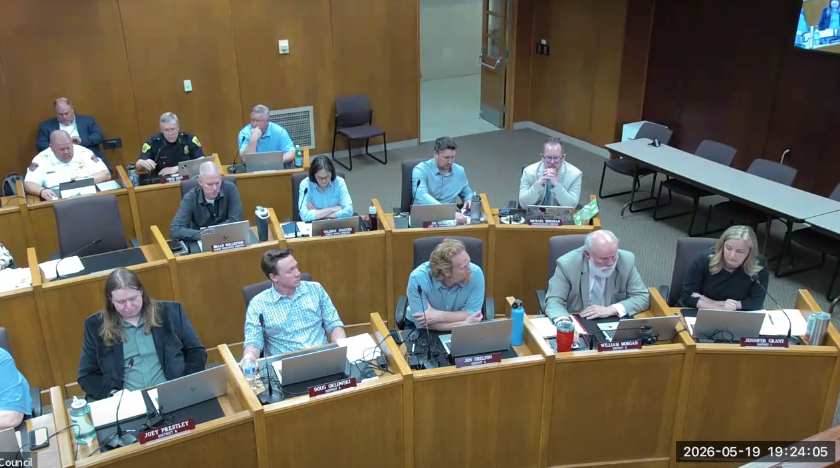
Recently, the Common Council voted 10-2 to approve a conditional use permit for a new downtown shelter. The vote followed months of community debate, neighborhood meetings, and public testimony. Most of the people who testified were well-meaning. I believe the people running the new shelter are well-meaning too.
That is not the issue.
The issue is what the city demanded in return for that permit. And what the city did not demand. More fundamentally, it is what the city could not demand, because the tool it used was never built to do the whole job under current Wisconsin law.
What This Work Actually Takes
Let me be plain about what I believe. Homelessness is not a character flaw. It is a crisis that catches people at their most vulnerable, and it requires a serious, sustained, professional response.
I work at New Community Shelter. I see every day what it actually takes to move people out of homelessness, not just off the street for a night, but out of homelessness.
It is hard work. It requires trained case managers. It requires year-round continuity of care. It requires accountability to outcomes, not just to intentions.
What it does not require is good feelings. Good feelings are not a program.
The Questions the City Should Be Asking
When a group applies to operate a facility for vulnerable people inside Green Bay, the question the council should ask is not only, “Does this feel compassionate?”
The question should be: Does this operator have the capacity, training, and structure to actually help people stabilize and move toward permanent housing? Is this a year-round commitment or a seasonal gesture? Who is accountable if the program fails?
Those are not hostile questions. Those are the minimum questions a responsible government owes to both the people it is trying to help and the neighborhoods it is asking to absorb that help.
We Hold Every Other Human-Services Field to This Standard
No one would accept a hospital that operates for six months and then locks its doors. No one would license a drug treatment center staffed by people without clinical credentials, review it after six months, and call it a plan. No school would be permitted to open without demonstrated staffing, safety protocols, and accountability to measurable outcomes.
We do not accept “we care deeply” as a substitute for professional standards in those settings. We should not accept it here either.
And notice what those examples have in common. Hospitals, schools, and treatment centers are not governed mainly through zoning permits. They are backed by licensing, inspections, and ongoing oversight. That is what real accountability looks like.
Homelessness services are human services. The people inside those buildings are in crisis. They deserve the same standard of care we expect in every other system we ask government to oversee. They also deserve the same kind of regulatory backbone behind it.
What the City Actually Approved
The permit for the new shelter includes a capacity cap, nighttime restrictions, a drug-disposal plan, and a six-month review. Those conditions are better than nothing. But they are a monitoring framework, not a care standard. They tell us when to react. They do not tell us what competence looks like before a permit is granted.
And under current Wisconsin law, that is not surprising. Since Act 67, conditional use permits in Wisconsin must be based on reasonable, measurable conditions, and if an applicant meets or agrees to meet those conditions, the permit must be granted. The CUP is now largely a tool for land-use compatibility, not a true front-end test of operator capability.
That gap is the problem.
State law limits what a conditional use permit can do. The real question now is whether the city is willing to build better tools.
The Right Tool for the Job
Green Bay has watched one major homelessness and housing organization collapse in the past year, and when that kind of failure happens, it is the most vulnerable residents who absorb the cost first. We cannot keep repeating that pattern. And we cannot fix it with permits alone.
What Green Bay should explore next, with full legal review, is a local licensing framework for certain high-occupancy, supervised, or service-intensive residential operations, along with stronger inspection and code-enforcement protocols. Wisconsin cities do have broad police-power authority, but any local approach has to be drafted carefully and in compliance with state and federal law.
Unlike a conditional use permit, a license can be structured for ongoing inspection, renewal, suspension, or revocation. That is what makes it a better vehicle for operator accountability than a one-time zoning approval. A licensing framework also reaches operators that other accountability tools do not.
Four Things That Should Not Be Optional
Year-round continuity. We do not solve homelessness six months at a time.
Leadership and staffing. If people are going to be housed in a facility meant to stabilize their lives, the city should expect trained management, clear operating plans, and documented partnerships where specialized services are needed.
Accountability. Not vague promises. Not slogans. Real standards, regular review, and consequences when those standards are not met.
Neighborhood compatibility. Clear protocols with nearby property owners, public safety coordination, and a responsible contact person from day one, not as an afterthought once problems start.
The Obligation Extends to Results
None of this is about being hard-hearted. I am a devout Catholic. I believe we have an obligation to care for our neighbors. That obligation does not end at good intentions. It extends to results. And it extends to building systems that are serious enough to turn compassion into durable, professional, accountable help.
Green Bay’s most vulnerable residents deserve more than a building and a permit. They deserve a system built to actually help them. The city may not be able to get all the way there through zoning alone under current Wisconsin law, but it can stop treating a conditional use permit as the full accountability the situation demands.
We can do better, and we must.